
Do you ever close your Bible after your morning quiet time, look away, and realize you cannot remember a single verse you just read? You are not alone. Millions of well-meaning believers struggle with the frustrating reality of passive reading. They skim through pages out of sheer religious obligation, but the words fail to pierce their hearts or transform their daily lives. If you want to move past superficial reading and experience real, life-altering encounters with the Living Word, you must learn how to study the bible with intention.
When you learn to approach the word of God with a methodical, intentional lens, the scriptures completely unlock, turning your morning devotion from a boring routine into a powerful spiritual anchor. If you find your focus completely shattered by intense exhaustion or stress, combine this method with our guide on how to walk in the Spirit with 10 biblical ways to overcome carnal thinking and keep your mind led by fire daily
Shifting From Casual Reading to Intentional Bible Study
🙏 Feeling Stuck? Get Your FREE Breakthrough Prayer Guide
Enter your email below and receive 7 powerful prayers for open doors.
No spam—only powerful prayers. Unsubscribe anytime.

Before digging into the framework, we must recognize that comprehension is never determined by how many chapters you can check off a reading list. The enemy loves to keep believers trapped in a cycle of hurried, thoughtless reading because a word that isn’t understood can easily be stolen away.
Often, an inability to concentrate or a loss of interest in scripture is a reflection of a deeper spiritual problem. When your mind is cluttered with hidden anxieties or you are actively showing the early signs of spiritual stagnation in a Christian, establishing a highly structured study system is exactly what you need to break the numbness
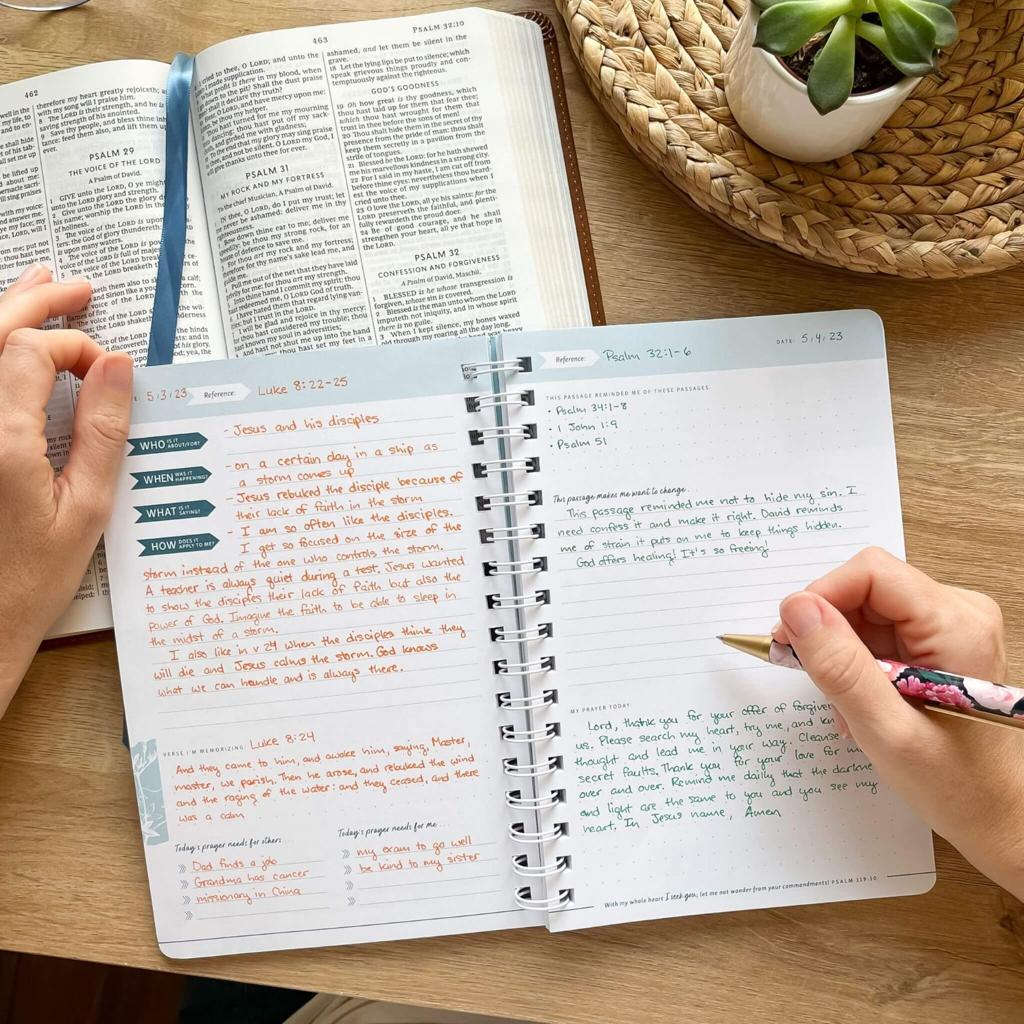
By using the classic 5W + 1H inductive method (Who, Where, What, When, Why, How), you transition from a passive spectator into an active spiritual explorer. Let’s break down the six powerful pillars of learning how to study the bible with intention.
The 6 Pillars of an Intentional Bible Study Framework
1. Observation: WHO Is Involved?
Every profound bible study session must begin with basic, objective observation. Before you can ask what a verse means to you today, you must discover what it actually meant to the people who were there when it happened.
- The Diagnostic Questions: Who is speaking or acting in this narrative? Who is the specific primary audience being addressed? Who is God revealing Himself to in this passage?
- The Deep Explanation: Carefully identifying the speaker, the human characters, and the target audience establishes the legal guardrails of truth. Studying historical context is not just an exercise for adults; it is a vital shield to protect your entire household from worldly deception. If you want to pass these foundational spiritual disciplines down to the next generation, learn 7 powerful ways on how to teach the bible to your child at home to build a lasting legacy.
2. Context: WHERE Does It Take Place?
Geography and environment carry immense spiritual weight in the scriptures. God never picks a backdrop by accident. The physical and emotional setting of a biblical story completely dictates the weight of the message.
- The Diagnostic Questions: What is the physical setting of this narrative (is it a barren wilderness, a royal palace, a crowded city, or an isolated mountaintop)? What is the underlying spiritual atmosphere (is there peace, intense conflict, testing, or demonic oppression)? How does this specific geographical moment fit into God’s bigger redemptive plan?
- The Deep Explanation: Knowing where an event happens completely changes your understanding of the text. A prayer of praise uttered while sitting safely in a palace reads very differently than a psalm of trust roared from the damp walls of a Roman prison dungeon. Paying close attention to the environment allows you to feel the true weight of what the characters went through.
3. Details: WHAT Is Happening?
This is the stage where you dissect the text like a detective looking for hidden clues. You must slow your reading speed down down to look closely at individual words, sentences, and textual shifts.
- The Diagnostic Questions: What specific words, themes, metaphors, or ideas repeat across the verses? You can sharpen your detailed observation skills using our handpicked collection of the 41 best Psalm verses in the Bible for hope-filled comfort in every season.
- The Deep Explanation: Repetition is the Holy Spirit’s way of underlining a point. If a writer uses the word “righteousness” or “covenant” five times in a single paragraph, that keyword is your anchor for interpretation. Look closely for connecting structural words like “therefore,” which tell you that what follows is a direct consequence of the truths stated right before it.
4. History: WHEN Does It Occur?

Scripture is not a collection of floating, disconnected fairy tales; it is an accurate historical timeline of God’s interaction with humanity. Knowing the historical timing anchors your faith in reality.
- The Diagnostic Questions: What is the historical moment or era of this event? Where does this specific passage fall within the grand story arc of Scripture? Is this instruction timeless truth for all believers, or was it a situational command meant only for an ancient cultural crisis?
- The Deep Explanation: Understanding the timeline helps you track how God progressively reveals His character over generations. It allows you to differentiate between cultural ceremonies that were entirely fulfilled through Christ, and eternal moral laws that every single believer must walk in today.
5. Purpose: WHY Does This Matter?
This phase bridges the gap between ancient history and your present life. You must evaluate the sovereign intent of the Holy Spirit in preserving these exact words for centuries.
- The Diagnostic Questions: Why was this specific message given to the audience during that time? Why did the people respond to God the way they did? What specific step of obedience is God inviting me into through this text?
- The Deep Explanation: Every verse was preserved with intentional design. If a passage records a king’s massive failure, it was recorded as a warning template for your own leadership boundaries. If it highlights an unlikely victory, it was designed to fuel your endurance during personal dry seasons.
6. Application: HOW Does God Work Here?
True biblical study must always lead to a deeper revelation of the nature of God. If your study method only fills your head with facts without drawing your heart closer to Christ, you are missing the point.
- The Diagnostic Questions: How does God act, move, or speak in this scenario? How do the people respond to His presence? How does this narrative connect to other cross-referenced Bible passages?
- The Deep Explanation: Look for the consistent attributes of God across the text. Is He manifesting as a fierce Deliverer, a comforting Father, or a holy Judge? Connecting these threads to other books of the Bible reveals the complete unity of scripture, building an unshakeable foundation for your faith.
Choosing the Right Tools: The 3 Best Bible Translations for Intention

To study the details and context of scripture with precision, the version of the Bible you use matters immensely. While paraphrased versions are easy to read casually, deep study requires an word-for-word (formal equivalence) translation that preserves the original structure of the Hebrew, Aramaic, and Greek texts. Here are the three best options to power your study altar:
- The English Standard Version (ESV): Renowned for its exceptional word-for-word accuracy and literary beauty, the ESV is the premier choice for deep textual analysis. It preserves the complex theological expressions of the writers while remaining highly accessible to the modern reader.
- The New King James Version (NKJV): If you love the majesty and poetic rhythm of the classic King James text but struggle with archaic old English vocabulary, the NKJV bridges the gap perfectly. It maintains strict textual loyalty while updating the language for clear readability.
- The New American Standard Bible (NASB): Widely regarded by theologians as the most literal word-for-word translation available, the NASB is a powerful tool for discovering structural word repetitions and analyzing microscopic linguistic details without bias.
Bring It Home: The Personal Transformation Phase
The ultimate goal of learning how to study the bible with intention is not to gain theological information, but to undergo radical spiritual transformation. Once you have observed the text and analyzed its context, you must sit quietly in the presence of the Holy Spirit and journal through these four internal check-points:
- What is God explicitly teaching me about Himself? (Identify His character traits, His names, and His ways in the text).
- What is He exposing about the current state of my heart? (Allow the word to act as a mirror, exposing hidden pride, lingering resentment, fear, or compromise).
- What timeless truth must shape my faith or actions today? (Pick one solid truth from your study to guard your mind during temptation).
- What immediate step of obedience is God inviting me into? (Faith without works is dead. Identify one practical action step you must take today based on what you studied).
5 Powerful Bible Verses to Meditate on With Intention
Biblical meditation is fundamentally different from worldly meditation. While the world tells you to empty your mind, Christian meditation requires you to fill your mind with the active truth of God’s Word [Bible Reasons]. When you slow down and ponder a single verse, you allow the Holy Spirit to calibrate your thoughts, strip away counterfeit weights, and ground your spirit in divine certainty.
If you want to move past superficial reading routines, use the 6-pillar inductive method to study these five foundational Bible verses to meditate on with intention:
1. For Calibrating Your Mind: Joshua 1:8
“This Book of the Law shall not depart from your mouth, but you shall meditate on it day and night, that you may be careful to do according to all that is written in it. For then you will make your way prosperous, and then you will have good success.”
- The Intentional Focus: This verse establishes that spiritual prosperity and true kingdom success are not random occurrences; they are structural rewards born from a daily lifestyle of deep scripture reflection [Marisa D’Amore]. Meditating on this passage reminds you that the Word must stay constantly on your lips and in your thoughts to anchor your daily behavior.
2. For Overcoming Hidden Anxiety: Isaiah 26:3
“You will keep him in perfect peace, whose mind is steadfast, because he trusts in You.”
- The Intentional Focus: When your thoughts are scattered by modern stress, fear, or visual exhaustion, your spiritual atmosphere turns toxic [Facebook]. Meditating on this verse forces you to anchor your focus on the unshakeable character of God rather than your volatile emotions, keeping you shielded in His perfect peace [Facebook].
3. For Restoring Your Spiritual Appetite: Psalm 119:27
“Make me understand the way of your precepts, and I will meditate on your wondrous works.”
- The Intentional Focus: If you are actively recognizing the early signs of spiritual stagnation in a Christian on your website, this verse serves as your immediate cry for restoration. It shifts your devotion away from legalistic reading checklists and asks the Holy Spirit to supernaturally awaken your desire to study the beautiful details of His Word.
4. For Tearing Down Counterfeit Strongholds: Romans 12:2
“And do not be conformed to this world, but be transformed by the renewing of your mind, that you may prove what is that good and acceptable and perfect will of God.”
- The Intentional Focus: Transformation requires raw structural mind renewal. Meditating heavily on this text helps you actively filter out secular conditioning, enabling you to break free from people-pleasing snares and walk out your true, authentic identity in Christ Jesus.
5. For Breaking Deep Wilderness Numbness: Psalm 1:2–3
“But his delight is in the law of the Lord, and on his law he meditates day and night. He is like a tree planted by streams of water that yields its fruit in its season, and its leaf does not wither. In all that he does, he prospers.”
- The Intentional Focus: This verse provides a visual guarantee for your spiritual landscape [Marisa D’Amore]. When you deliberately soak in scripture day and night, you draw deep nourishment from the Holy Spirit, ensuring your soul stays vibrant, fruitful, and completely safe from dry plateau seasons.
The Intentional Bible Study Weekly Tracking Plan

To help you transition from theory into long-term discipline, use this structured weekly breakdown to apply the 6 pillars smoothly across your devotional life. Consistency is the ultimate sledgehammer that shatters complacency. If you find yourself struggling to maintain this daily rhythm, combine this framework with our step-by-step master guide on 10 powerful ways to build a bible study habit that actually lasts to permanently lock in your morning devotional discipline. Even if your schedule feels completely overflowing right now, learning how to walk with God daily even when life feels busy will give you the practical steps to keep your daily connection strong.
Day 1: The Selection & Prayer Phase
Select a short book of the Bible (such as James, Ephesians, or Philippians) to study over the next month.
Spend your time praying for open eyes and a tender heart. Read the entire short book all the way through casually in one sitting to capture its overarching theme.
Day 2: Structural Observation (WHO & WHAT)
Pick a specific, short passage (3 to 5 verses max).
Write the verses down word-for-word in your journal. Circle all key characters, label the speakers, underline recurring words, and identify all direct commands or explicit promises.
Day 3: Contextual Digging (WHERE & WHEN)
Research the background of the passage.
Look at your Bible maps or footnotes to find where the event happened. Determine the historical setting and ask yourself if the environment (like a season of famine or severe persecution) alters the emotional weight of the verses.
Day 4: Spiritual Purpose (WHY & HOW)
Analyze the heart of the text.
Write a summary of why the Holy Spirit chose to preserve this narrative. Identify how God reveals His character, attributes, and names across these specific lines.
Day 5: Personal Manifestation (The Bring-It-Home Checklist)
Complete your 4-point personal transformation questions.
Write a concrete, actionable step of obedience that you will execute within the next 24 hours based entirely on your study observations.
Days 6 & 7: Meditation & Rest
Reflect on your journal notes, pray through your insights, and review your tracking metrics.
If you struggled with consistency during the week, do not fall into discouragement. Reset your parameters and prepare your altar for the upcoming week.
A Powerful Prayer for Intention and Spiritual Discernment

Speak this prayer aloud at your altar before you begin your study framework to open your spiritual senses to the deeper truths of Scripture.
Almighty and Sovereign Father, the Source of all wisdom and the Author of life, I bow before Your presence today with a hungry and expectant heart. I refuse to approach Your Holy Word with a spirit of passivity, distraction, or religious routine. I ask right now that the precious blood of Jesus cleanse my mind and sharpen my focus. Holy Spirit, remove the veils of spiritual fatigue or hidden stagnation that make Your word feel dry or distant.
I pray that You grant me the spirit of wisdom and revelation in the knowledge of Christ. Open my eyes that I may see the deep and marvelous things hidden within Your law. Give me the discernment to observe the text, understand its historical context, and hear Your still, small voice with clarity. I do not study merely to fill my head with information, but to lay down my flesh and transform my character. Let Your living Word rebuild my thoughts, break every false limitation over my destiny, and order my steps into perfect obedience today. In the mighty and unmatchable name of Jesus Christ, Amen!
Frequently Asked Questions About Intentional Bible Study
1. What is the difference between reading the Bible and studying the Bible?
- Reading the Bible is a high-level overview focused on completion and broad exposure to the narrative script of scripture. Studying the Bible with intention involves breaking down individual passages, asking analytical questions, using cross-references, and actively journaling to digest the deep spiritual food within the text.
How long should an intentional Bible study session take?
- You do not need to spend hours at a desk to study effectively. A highly focused, deeply intentional session using this 6-step framework can be completed in just 20 to 30 minutes of dedicated quiet time every morning.
What tools do I need to start studying the Bible with intention?
- All you need is a clear translation of the Bible (such as the ESV, NKJV, or NASB), a clean journal, a pen, and an open heart. As you advance, you can integrate a standard concordance and a trusted study Bible to help verify historical details.
Conclusion: Transition From a Passive Reader to a Master Workman

Learning how to study the bible with intention is ultimately the dividing line between a believer who barely survives on the spiritual surface and one who walks in profound kingdom dominion. The scriptures are not a collection of casual suggestions; they are a living, breathing diagnostic tool designed to search your heart and align your steps. When you deliberately slow down your pace, ask strategic questions of the text, and apply the 5W + 1H inductive framework, you strip the enemy of his ability to keep you blind to your true authority.
Do not allow the rushing speeds of modern culture or digital distractions to rob you of your quiet time intimacy. Pick a literal, word-for-word translation, layout your study journal with purpose, and protect your early morning parameters with unyielding consistency. By moving past shallow reading routines and activating your new weekly study tracking plan, you ensure that your private daily altar stays completely ablaze with fresh fire. Step into the Word with total expectation—your transition from a passive reader into a focused, intentional workman of the faith starts tomorrow morning!