Have you ever opened your Bible, read several verses, and closed it without remembering what you read? Perhaps you want to grow closer to God, understand Scripture more deeply, and experience the peace that comes from His promises, but you struggle to know where to begin.
One important spiritual discipline that can transform your daily walk with God is learning on how to meditate on God’s word.
Biblical meditation is more than reading a chapter or memorizing a verse. It involves slowing down, thinking deeply about what God has said, understanding its meaning, and allowing His truth to influence your thoughts, decisions, attitudes, and actions.
God does not want His Word to be something you read occasionally and forget. He wants His truth to become part of your everyday life.
In this guide, you will discover seven practical biblical steps to meditate on Scripture, understand God’s Word, develop a consistent habit, and apply biblical truth to your daily challenges.Whether you are a new believer or have been walking with Christ for many years, these steps can help you build a deeper relationship with God.
What Does It Mean to Meditate on the Word of God?
🙏 Feeling Stuck? Get Your FREE Breakthrough Prayer Guide
Enter your email below and receive 7 powerful prayers for open doors.
No spam—only powerful prayers. Unsubscribe anytime.
To meditate on the Word of God means to thoughtfully reflect on Scripture, consider its meaning, remember its promises, and apply its teachings to your life.
Biblical meditation is different from simply reading the Bible. Reading introduces you to God’s Word, while meditation gives you time to understand it and consider how it should shape your life.
Consider what God told Joshua:
“This book of the law shall not depart out of thy mouth; but thou shalt meditate therein day and night, that thou mayest observe to do according to all that is written therein.”
Notice that God connected meditation with obedience.
He did not simply tell Joshua to read the Scriptures. He instructed him to meditate on them and observe what was written.This teaches us an important spiritual principle: God’s Word should influence not only what we believe but also how we live.
Biblical meditation involves three important actions:
- Reflection: Thinking carefully about what Scripture says.
- Understanding: Discovering what the passage teaches about God, His character, and His instructions.
- Application: Allowing God’s truth to guide your choices and behavior.
The purpose is not merely to collect Bible verses but to become a person whose life reflects God’s Word.
Why Is Meditating on God’s Word Important?
Life is filled with distractions, responsibilities, worries, and situations that can influence our thinking.
Without regularly filling our minds with God’s truth, it becomes easy to allow fear, discouragement, anger, and worldly influences to shape our attitudes.Meditating on Scripture helps us direct our attention back to God.
Here are six important benefits of biblical meditation.
1. It Renews Your Mind
Our thoughts influence how we respond to life’s challenges. When we constantly focus on negative experiences, fear, and discouragement, those thoughts can affect our decisions.God’s Word provides truth that challenges unhealthy thinking and reminds us of His promises.
Romans 12:2 (KJV) teaches:
“And be not conformed to this world: but be ye transformed by the renewing of your mind…”
When you meditate on Scripture, you give yourself an opportunity to recognize thoughts that contradict God’s truth and replace them with biblical understanding.
For example, when you feel inadequate, meditate on 2 Corinthians 12:9, which reminds believers that God’s grace is sufficient.Rather than allowing discouragement to define you, remember that God’s strength is sufficient in your weakness.
2. It Strengthens Your Faith
Faith grows as we become more familiar with God’s Word and learn to trust His character.
Romans 10:17 (KJV) says:
“So then faith cometh by hearing, and hearing by the word of God.”
When you regularly reflect on Scripture, you become more familiar with God’s promises, His faithfulness, and His instructions.For example, when you face uncertainty, meditate on Proverbs 3:5–6.
Remember that trusting God does not mean you understand every situation. It means choosing to depend on Him even when the way forward is unclear.
3. It Brings Peace During Difficult Seasons
Anxiety, uncertainty, and difficult circumstances can make it challenging to experience peace.However, Scripture reminds us that God is present even when life feels overwhelming.
Isaiah 26:3 (KJV):
“Thou wilt keep him in perfect peace, whose mind is stayed on thee: because he trusteth in thee.”
When you meditate on this verse, consider what it means to keep your mind focused on God.Instead of allowing every troubling thought to control your attention, pause and remember His faithfulness.This does not mean that every problem immediately disappears. It means that you can seek God’s peace while navigating difficult circumstances.
4. It Helps You Recognize and Resist Temptation
Temptation often begins with thoughts, desires, and decisions that gradually move us away from God’s instructions.Knowing Scripture helps us recognize what is right and gives us biblical truth to remember when temptation comes.
In Matthew 4:1–11, Jesus responded to Satan’s temptations by quoting Scripture.His example demonstrates the importance of knowing God’s Word and understanding its truth.When you meditate on Scripture, you become better prepared to recognize temptation and respond with wisdom.
5. It Helps You Make Wise Decisions
Not every opportunity is necessarily the right opportunity. Not every decision that appears attractive will lead to something beneficial.God’s Word provides principles that help believers make decisions with wisdom, patience, honesty, and discernment.
Psalm 119:105 (KJV):
“Thy word is a lamp unto my feet, and a light unto my path.”
Meditating on Scripture helps you consider whether your choices align with biblical principles.Before making an important decision, take time to pray, examine relevant Scriptures, and consider the wisdom they provide.
6. It Deepens Your Relationship With God
The purpose of reading and meditating on Scripture is not simply to become knowledgeable about the Bible.It is also to know God more deeply.As you spend time understanding His Word, you learn more about His character, His love, His holiness, His mercy, and His faithfulness.
Through Scripture, you discover more about who God is and how He calls you to live.This makes Bible meditation an important part of developing a consistent relationship with Him.
7 Powerful Steps on How to Meditate on the Word of God

Now that you understand the importance of biblical meditation, how can you begin practicing it?You do not need complicated techniques or hours of free time. You can start with one passage, a quiet moment, and a willing heart.
Here are seven practical steps.
1. Choose One Bible Verse or Passage
Begin by selecting a Scripture passage that relates to what you are experiencing or an area where you want to grow spiritually.Avoid trying to meditate on too many verses at once.Choose one verse and give yourself enough time to understand it.
For example:
- When you are anxious, read Philippians 4:6–7.
- When you need strength, read Isaiah 41:10.
- When you need guidance, read Proverbs 3:5–6.
- When you feel discouraged, read Psalm 34:18.
- When you need peace, read John 14:27.
- When you want to grow spiritually, read Colossians 3:16.
Read the surrounding verses too, so you understand the passage in its proper context.
Practical exercise:
Write your chosen verse in a notebook. Read it slowly several times and identify the main message.Ask yourself:
- What is this passage teaching me?
- What does it reveal about God’s character?
- Why is this message important in my life today?
Starting with one passage makes meditation more focused and meaningful.
2. Read the Scripture Slowly and Carefully
Do not rush through Bible reading simply to complete a chapter.Take your time and pay attention to individual words and phrases.For example, consider Psalm 23:1:
“The LORD is my shepherd; I shall not want.”
Instead of reading the verse quickly, pause and reflect on what it means that the Lord is your Shepherd.A shepherd guides, protects, and cares for the sheep.What does this teach you about God’s care?What areas of your life are you struggling to surrender to His guidance?
You can also read the same passage in another reliable Bible translation to help clarify its meaning.Remember, the goal is not to force a personal meaning into Scripture. It is to understand what the passage actually teaches.
3. Personalize the Biblical Truth
One powerful way to meditate on Scripture is to consider how its message applies to your own circumstances.Personalizing a verse does not mean changing what the Bible says. It means recognizing how God’s truth applies to your life.For example, consider Psalm 23:1:
“The LORD is my shepherd; I shall not want.”
You can reflect on this truth by saying:”The Lord is my Shepherd. I can trust Him to guide me, provide for my needs, and lead me according to His wisdom.”
Another example is Isaiah 41:10:”Fear thou not; for I am with thee: be not dismayed; for I am thy God…”
You can reflect: “God reminds me that I am not facing my challenges alone. I can seek His strength instead of allowing fear to control my decisions.”Allow Scripture to speak to your circumstances while respecting its original meaning.
4. Repeat the Verse and Reflect on Its Meaning
Repetition can help you remember Scripture and think more deeply about its message.After choosing a verse, read it several times.Pause after each reading and consider a different aspect of its meaning.For example, meditate on Philippians 4:6:
“Be careful for nothing; but in every thing by prayer and supplication with thanksgiving let your requests be made known unto God.”
Think about these questions:
- What worries am I carrying?
- Have I brought these concerns to God in prayer?
- Am I remembering to thank Him?
- How can I respond to my worries with faith?
You can quietly repeat the verse throughout your day and remember its message when difficult thoughts arise.
5. Picture How God’s Truth Applies to Your Life
Biblical meditation also involves considering what obedience to Scripture looks like in real situations.For example, if you are meditating on Matthew 5:44, which teaches believers to love their enemies and pray for those who persecute them, think about how you can respond when someone mistreats you.
What would it look like to respond without hatred?How can you establish healthy boundaries while refusing to seek revenge?How can you pray for someone who has hurt you?The purpose is to allow biblical truth to influence your responses.
Do not use imagination to replace the meaning of Scripture. Instead, consider practical ways to live according to what God has taught.
6. Turn the Scripture Into Prayer
Prayer is a beautiful way to respond to God’s Word.After meditating on a passage, use its message to guide your conversation with God.For example, after reading Proverbs 3:5–6, you might pray:
“Lord, help me trust You with all my heart. When I feel uncertain about the future, teach me not to depend only on my own understanding. Guide my decisions and help me acknowledge You in everything I do. Give me wisdom to follow Your direction. In Jesus’ name, Amen.”
You can also pray directly from the Psalms, using their words to express gratitude, repentance, worship, and dependence on God.This helps connect Bible reading with your personal prayer life.
7. Carry God’s Word With You Throughout the Day
Meditation should not end when you close your Bible.One of the most practical ways to develop this spiritual discipline is to remember the Scripture you studied and reflect on it during ordinary activities.
For example:
- In the morning, remember your chosen Bible verse.
- During work, reflect on its message when facing a difficult situation.
- When you feel anxious, pause and remember what Scripture teaches.
- Before making decisions, consider whether your actions reflect biblical wisdom.
- At night, review what you learned and thank God for His guidance.
Psalm 1:2 (KJV) describes the blessed person as one whose delight is in the law of the Lord and who meditates on His law day and night.This reminds us that God’s Word should influence our lives beyond our designated Bible-reading time.
The Beginner’s Blueprint to Weaponize the Word
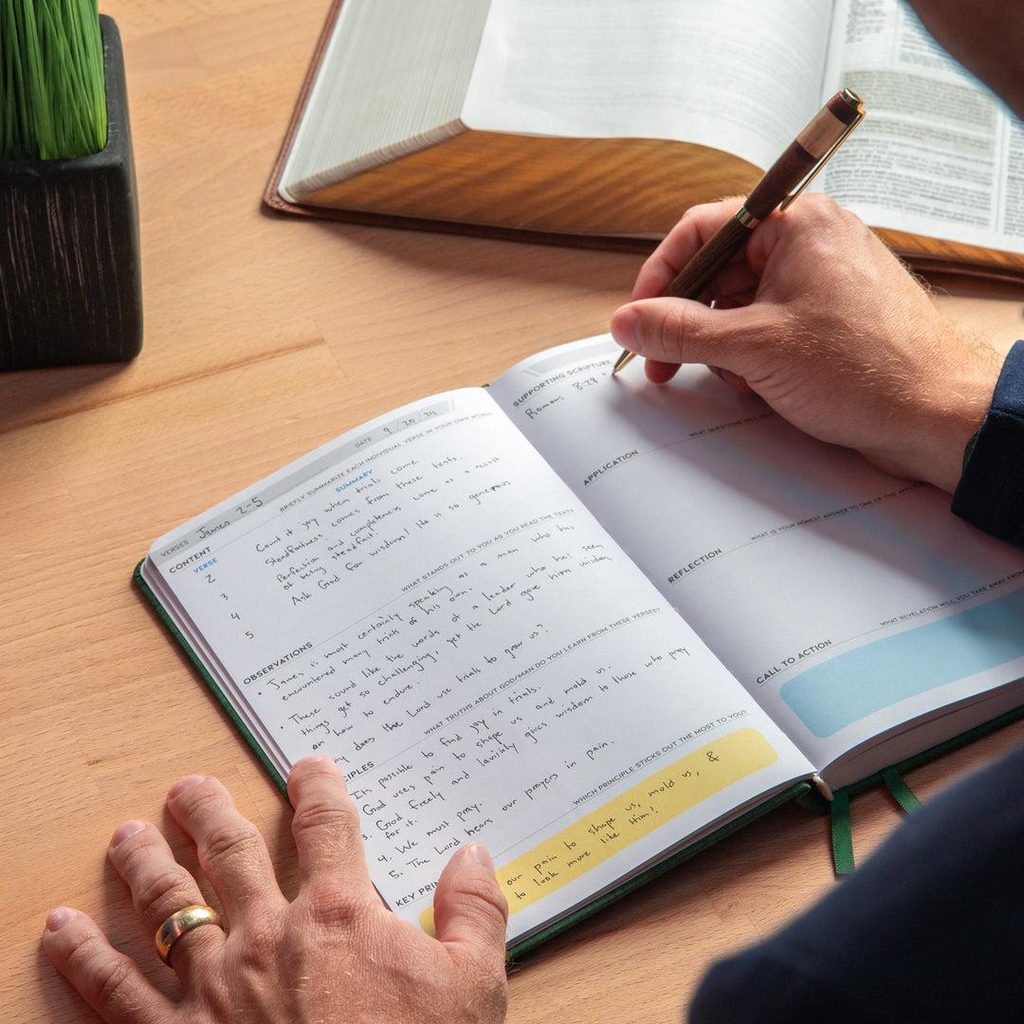
If you are new to the Bible, the sheer size of it can look scary. But true spiritual power does not come from reading pages fast. It comes from letting a few words change your mind.
Commit just 5 to 10 minutes every single morning. Use this high-impact, 7-step blueprint to turn simple reading into a powerful shield for your day.
1. Isolate a Single Verse
Do not scatter your focus across entire chapters. Pick one sharp arrow of truth that speaks directly to your current mental battle, fear, or season of life. Giving your mind a single target makes your focus laser-sharp and deeply meaningful.
2. Decelerate Your Reading
Force your eyes and mind to slow down agonizingly. Read your chosen verse three times out loud, pausing on individual words. If a verse says, “The Lord is my light and my salvation,” stop and dwell heavily on the word “my”—the staggering reality of personal ownership.
3. Deconstruct the Vocabulary
Never skip past a word you cannot easily define. Use a dictionary or a cross-reference tool to look up theological words like righteousness, grace, or covenant. Understanding the exact definition strips away confusion and reveals the raw weight of the text.
4. Anchor the Truth in Writing
Do not just think about the verse; write it down by hand in a notebook. The physical act of writing slows your brain down, anchors your moving hand to your thoughts, and forces you to process the core message word for word.
5. Weaponize the Text Personally
Tear down the distance between ancient history and your current reality. Look at the page and ask: What does this reveal about God’s character, and how does it change my circumstances today? Insert your own name directly into the promise to transform it into an active shield against your anxieties.
6. Pray the Verse Back as an Ultimatum
Turn the scripture into a direct conversation with heaven. Use God’s own written words to dictate the vocabulary, authority, and focus of your prayer. Hold onto His covenant promises with bold, unapologetic faith.
7. Rehearse the Word Continuously
Do not leave the Word at your desk when you close your Bible. Set phone reminders, write it on index cards, or repeat it under your breath during your commute. Squeeze the text throughout your day so that when unexpected stress hits, it is the truth of the Word that bleeds out of your reactions.
Consistency Wins
Doing this for 10 minutes every single day creates an unshakeable habit. It is infinitely more powerful than reading for two hours once a week and forgetting it.
Let’s practice this right now. Tell me how you are feeling today (like worried, tired, or angry), and I will give you one exact verse to start with.
10 Great Bible Verses to Read Every Day
To find real peace, you must slow down when you read the Bible. Do not just look at the words. Let them sit deep in your mind. Choose one verse from this list every day to help you fight worry and stay strong.
The Daily Verse List
1.For Guidance | Psalm 119:105
What it means: God’s Word is like a flashlight in a dark room. It shows you the exact next step to take when you feel lost.
2.For Peace | Isaiah 26:3
What it means: If you keep your mind focused on God instead of your problems, He will keep your heart completely calm.
3. For Strength | Isaiah 41:10
What it means: You do not have to feel strong on your own. God is with you, and He will hold you up with His powerful hand.
4. For Faith | Romans 10:17
What it means: Trusting God does not happen by accident. Your faith grows stronger every time you read or hear His words.
5. For Wisdom | James 1:5
What it means: If you do not know what to do next in life, just ask God. He loves to give clear answers without making you feel bad.
6. For Trust | Proverbs 3:5–6
What it means: Stop trying to figure out everything by yourself. Trust God completely, and He will smooth out your path.
7. For Comfort | Psalm 34:18
What it means: When your heart is broken, God does not run away. He stays very close to you to help you heal.
8. For Spiritual Growth | Colossians 3:16
What it means: Let the words of Jesus fill up your life. Talk about them with friends and think about them constantly.
9. For Obedience | Joshua 1:8
What it means: Think about God’s laws day and night. When you do what He says, your life will go the right way.
10. For Rest | Matthew 11:28–30
What it means: If you are tired and stressed from carrying heavy burdens, give them to Jesus. He will give you real rest.
A Simple Plan for Your Day
You do not need a lot of time to think deeply about the Bible. Use this easy schedule to keep God’s Word in your mind all day long:
- Morning (When you wake up) — Pray for Help
- Goal: Ask God to clear your mind and help you understand His truth before you look at your phone.
- Morning (Bible Time) — Read Slowly
- Goal: Pick one verse. Read it out loud a few times. Think about the exact meaning of every word.
- Morning (Writing) — Put It on Paper
- Goal: Write the verse down by hand in a notebook. This helps your brain remember it much better.
- Afternoon — Think About It Again
- Goal: Say the verse quietly to yourself while you work, walk, or do chores to stop stress before it starts.
- Evening — Check Your Day
- Goal: Look back at your actions. Did you follow what the verse taught you today?
- Before Sleep — Say Thank You
- Goal: Give your worries to God, thank Him for His help, and get a good night of restful sleep.
Big Mistakes to Avoid

In our culture, we are trained to value speed, efficiency, hacking the system, and quick wins. While these traits can help you climb a career ladder, they will completely break your spiritual life.
To get real value from the Bible, you have to unlearn these five cultural habits.
1. Reading Too Fast (The “Productivity” Trap)
The Habit: We treat everything like a checklist. We scroll quickly through feeds, listen to audiobooks at 2x speed, and track our fitness goals on apps. We think that reading more pages means we are doing better.
The Reality: You cannot skim-read your way into a peaceful mind. Treating the Bible like an email inbox means the words hit your eyes but never touch your heart. Spiritual depth requires you to destroy the urge to be fast. If you only have ten minutes, it is infinitely better to read one single sentence five times than to breeze through two chapters and remember nothing.
2. Picking Verses Out of Context (The “Instagram Quote” Mistake)
The Habit: We live in a world of quick soundbites, motivational posters, and social media captions. We love to take a single, beautiful line, cut it away from the rest of the page, and paste it onto an image to make ourselves feel good.
The Reality: When you pull a verse out of its setting, you make it mean whatever you want it to mean, rather than what God actually said. For example, Western culture loves to quote Philippians 4:13 (“I can do all things through Christ”) to claim they will win a sports match or get a corporate promotion. But the writer, Paul, actually wrote that sentence from a dark, dirty prison cell while talking about how to survive being totally broke and starving. True power comes from knowing the whole story.
3. Treating the Bible Like a Magic Trick (The “Self-Help” Delusion)
The Habit: The Western self-help industry tells us that if we repeat the right positive phrases, manifest our desires, or think the right thoughts, the universe will magically give us wealth, perfect health, and instant success.
The Reality: The Bible is not a manifestation tool or a cosmic vending machine. Thinking deeply about scripture is not a trick to force God to pay your bills or hand you a comfortable life. The purpose of the Bible is to change your character, align your stubborn desires with His will, and give you unshakeable peace inside the storm—not to magically wave a wand and remove the storm altogether.
4. Only Memorizing, Not Doing (The “Intellectual” Escape)
The Habit: Our education system tests us on what we can memorize and repeat on a test sheet. Because of this, we often mistake knowing information for actually growing up. We think that if we can quote ancient text or argue theology, we are spiritually mature.
The Reality: God does not grade you on your trivia scores. Memorizing a verse about patience means absolutely nothing if you still yell at the barista, treat your spouse poorly, or cheat on your taxes. True meditation bridges the gap between your brain and your behavior. If a verse does not actively rewrite how you use your money, your mouth, and your free time, it is just useless head knowledge.
5. Giving Up When Your Mind Drifts (The “Low Attention Span” Defeat)
The Habit: Our brains are constantly flooded with cheap dopamine hits from smartphones, notifications, and 15-second videos. Because our technology is designed to constantly steal our focus, sitting in a quiet room with a physical book for ten minutes can feel incredibly boring and difficult.
The Reality: The moment you sit down to meditate, your brain will scream at you. You will suddenly remember a work email you forgot to send, an item you need from the grocery store, or a chore you skipped. This does not mean you are bad at meditation; it just means your brain is detoxing from digital noise. Do not pack up and quit. Treat your wandering mind like a puppy: every time it runs away, gently pick it up and place it right back on the verse. Building focus is a muscle that takes time to train.
Frequently Asked Questions About Meditating on God’s Word
1. How long should I meditate on the Word of God?
There is no specific number of minutes required by the Bible. Beginners can start with five to fifteen minutes and gradually spend more time as they develop the habit. The goal is meaningful reflection and application, not simply counting minutes.
2. What is the best time to meditate on Scripture?
You can meditate on God’s Word at any time. Morning meditation can help you begin the day with biblical wisdom, while evening meditation can help you reflect on God’s faithfulness. Choose a time that allows you to focus consistently.
3. Can I meditate on one Bible verse every day?
Yes. You can spend an entire day reflecting on one verse, especially when it contains a message you need to understand more deeply. Read the surrounding passage to maintain its biblical context.
4. What is the difference between reading the Bible and meditating on it?
Bible reading involves examining and understanding Scripture, while meditation involves thoughtfully reflecting on its meaning, remembering its message, and considering how to apply it. Both practices are important for spiritual growth.
5. How do I know if I am meditating on Scripture correctly?
Ask whether you are understanding the passage in its proper context, considering what it teaches about God, and allowing its message to guide your decisions and actions. Biblical meditation should lead you toward greater understanding, faith, and obedience.
6. What should I do when my mind wanders during Bible meditation?
Do not become discouraged. Gently bring your attention back to the passage. Read it again, write down your thoughts, and ask God to help you understand His Word.
A Prayer for Understanding and Meditating on God’s Word

Heavenly Father,
Thank You for giving me Your Word as a source of wisdom, guidance, and truth.Lord, help me develop a deeper desire to read and meditate on Scripture every day. Teach me not to rush through Your Word but to slow down, understand its meaning, and allow it to transform my thinking.
When my mind is distracted, help me focus on what You are teaching me. When fear and discouragement try to take control of my thoughts, remind me of Your promises.Give me wisdom to understand Scripture, faith to trust Your promises, and courage to obey Your instructions.
May Your Word guide my decisions, strengthen my faith, and help me become more like Christ.Let Your truth remain in my heart throughout the day, influencing my words, thoughts, and actions.In Jesus’ mighty name, Amen.
Final Encouragement: Let God’s Word Transform Your Daily Life

Learning how to meditate on the Word of God is one of the most meaningful ways to develop a deeper understanding of Scripture and strengthen your relationship with Him.You do not have to begin with complicated Bible studies or long hours of reading.Start with one verse. Read it carefully. Reflect on its meaning. Pray about it and look for ways to apply its teaching.
As Psalm 119:105 reminds us, God’s Word is a lamp to our feet and a light to our path.When you make Scripture part of your daily life, you give God’s truth an opportunity to shape how you think, respond, and make decisions.
Start today. Choose one Bible verse, meditate on it, and let God’s Word guide your steps.May your heart grow in faith, your mind be renewed by Scripture, and your life reflect the truth of God’s Word.
Deepen Your Daily Walk with Jesus
If you are looking for more spiritual strength, encouragement, and biblical guidance for your daily life, explore our popular resources on Jesus the Way Daily:
- Renew Your Mind: Start your mornings with a clear focus by bookmarking our Daily Bible Verse App reflection page.
- Find Your Purpose: Learn how to walk in obedience and find clear direction with our comprehensive guide on Understanding God’s Will for Your Life.
- Overcome Anxiety: Discover powerful scriptural strategies for mental peace in our deep dive into Scriptures for Anxiety and Stress Relief.